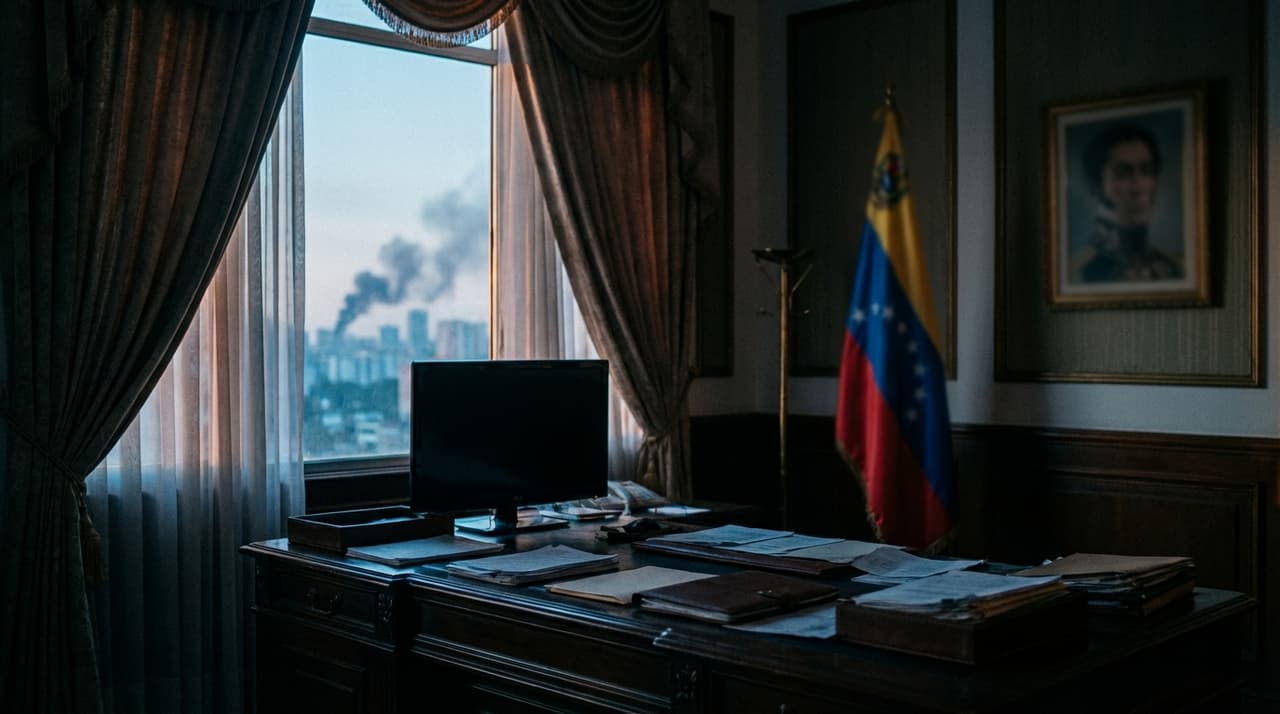
- U.S. forces conducted large-scale airstrikes in Venezuela, capturing President Nicolás Maduro and his wife on January 3, 2026, with President Trump announcing the operation on Truth Social.
- Maduro faces narcoterrorism indictments in New York's Southern District, as U.S. Attorney General Pam Bondi confirmed charges, while Venezuelan Vice President Delcy Rodríguez demands proof of life.
- The capture follows escalating U.S. actions, including designating Maduro-led groups as terrorist organizations and prior naval operations, raising questions about legality and future instability in Venezuela.
A Swift and Surprising Operation
In a dramatic escalation of tensions, U.S. military forces launched airstrikes across northern Venezuela early on January 3, 2026, targeting locations in Caracas and other areas. According to people familiar with the matter, the operation led to the capture of Venezuelan President Nicolás Maduro and his wife, Cilia Flores, who were subsequently flown out of the country. President Donald Trump confirmed the action in a post on Truth Social, stating that the couple was in U.S. custody, though details on their exact whereabouts remain unclear amid vague references to a possible Guantánamo Bay stop during transfer.
Efforts to restructure Venezuela's political landscape have hit a snag, with Vice President Delcy Rodríguez declaring a national emergency and accusing the U.S. of an unlawful intervention. In a brief statement, Rodríguez said, "We demand immediate proof of life and respect for our sovereignty," highlighting the chaotic aftermath. U.S. officials, speaking anonymously due to the sensitivity of the matter, indicated that Delta Force units were involved in the capture, which came after months of CIA operations and naval deployments aimed at countering drug trafficking networks linked to Maduro.
Legal and Diplomatic Fallout Unfolds
Without a deal, the Maduro regime faces collapse, but the immediate focus shifts to U.S. legal proceedings. U.S. Attorney General Pam Bondi announced that Maduro is under indictment for narcoterrorism charges in the Southern District of New York, with filings dating back to prior designations of groups like Cartel de los Soles as terrorist organizations. "This marks a new dawn for justice," said Deputy Secretary Christopher Landau in a paraphrased comment, though international reactions have been mixed, with some experts questioning the legality of the strikes under international law.
Market data shows heightened volatility in oil prices following the news, as Venezuela's crude exports face uncertainty. Attempts to reach out to Russian officials for comment on potential support for Rodríguez were unsuccessful, but sources suggest she may be seeking refuge abroad. The operation builds on prior actions, including a naval quarantine with the USS Gerald R. Ford and seizures of drug vessels, which had already strained relations. Senator Marco Rubio hailed the capture as ending a "narco-terrorist" regime, while others warn of risks from further escalation.
What Comes Next
In the short term, all eyes are on Trump's scheduled 11 a.m. EST press conference at Mar-a-Lago, where he is expected to outline next steps. Analysts note that if Rodríguez resists, it could lead to prolonged instability, echoing past U.S. interventions that resulted in casualties. The historical context includes failed coup attempts and prisoner swaps, but this direct action represents a significant shift. For now, the focus remains on the legal process and potential regime transition, with updates to follow as more details emerge.
Correction: An earlier version of this article misstated the date of the airstrikes; it was January 3, 2026, not late 2025.