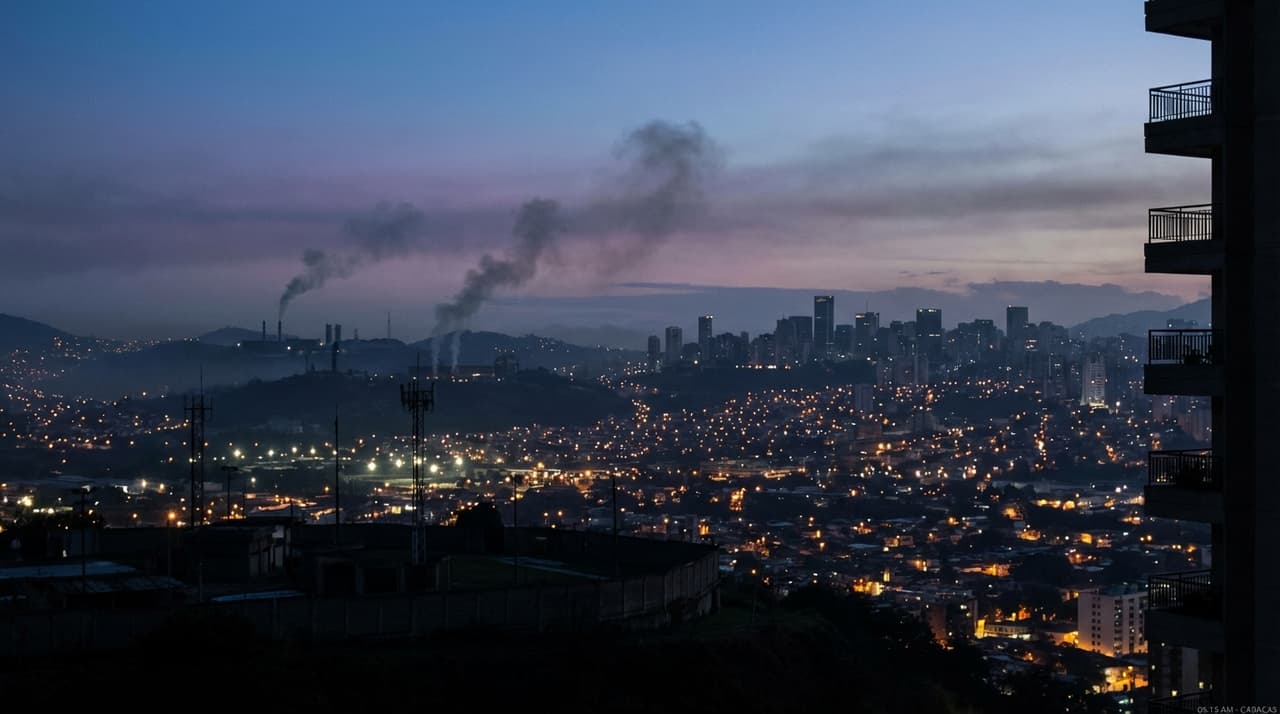
- U.S. military forces captured Venezuelan President Nicolás Maduro and his wife Cilia Flores in early morning strikes on January 3, 2026, targeting sites in Caracas and other regions.
- President Trump stated the U.S. was prepared to stage a second attack if needed but did not deploy it, with minor U.S. injuries reported and no deaths.
- Maduro and his wife are being transported to New York for trial on drug trafficking indictments, escalating a campaign against what Trump calls a "narco state."
Explosions began around 2 a.m. local time in Caracas, with strikes also hitting Miranda, Aragua, and La Guaira states, specifically targeting Fuerte Tiuna military sites. Videos circulating online showed U.S. aircraft and fireballs lighting up the sky, according to people familiar with the operation. President Trump described watching the "extremely complex" mission unfold "like a TV show" during an interview on Fox and Friends, defending it as crucial to stopping drug flows while dismissing constitutional critiques from opponents.
In a post on Truth Social, Trump confirmed the capture and outlined plans for an 11 a.m. EST address from Mar-a-Lago to detail the operation further. Attorney General Pam Bondi corroborated the transport of Maduro and Flores to New York for trial, citing longstanding drug trafficking indictments. This move marks a significant escalation in U.S. pressure on Venezuela's oil-dependent economy, which has faced prior seizures of sanctioned tankers linked to Iran and drug routes, as well as a "total blockade" and strikes on drug facilities and docks.
Venezuela's government has declared a state of emergency in response, vowing resistance and calling for UN Security Council action. Defense Minister Vladimir Padrino López warned of "imperialist aggression" in a televised statement, urging calm amid risks of anarchy. The strikes follow months of Trump threats, CIA covert operations, and a naval buildup dubbed the "largest Armada in South America history" by administration officials. Trump has labeled Maduro's regime a "narco state," declared cartels unlawful combatants, and expanded sea strikes to include land targets, with White House Chief of Staff Chris Wiles confirming that escalation would continue until Maduro yields.
Market analysts are closely watching for potential disruptions to Latin American oil flows, which could spike energy prices amid global shifts. The operation has already raised drug trafficking costs, according to sources in law enforcement, and could deter similar activities in other nations if Maduro's trial proceeds as planned. However, critics, including Senate Democrats and human rights groups, question the legality and executive overreach of the strikes without congressional approval. Senator Mark Warner criticized the potential for overextension, while Senate Republicans have blocked efforts to impose limits on such attacks.
Internationally, the capture echoes past U.S. regime-change efforts, drawing parallels to the 1989 Panama invasion that captured Manuel Noriega and more recent strikes in Iran. The buildup to this operation started with sea strikes on drug vessels in September 2025, which killed 11 and sparked controversy, followed by oil tanker seizures in December and a late December land strike on a drug dock. Admiral Bradley's prior strikes are under ongoing probes, adding a layer of scrutiny to the military's actions.
Looking ahead, Trump's news conference may outline next steps, with Venezuela facing instability or potential retaliation. Experts note risks of regional escalation, but some predict a power vacuum could open opportunities for opposition planning. Public reactions in the U.S. are split: Trump supporters praise the drug crackdown, while opponents decry constitutionality concerns. As this breaking story develops, stakeholders are assessing the implications for broader anti-drug campaigns and international relations, with updates expected as more details emerge.