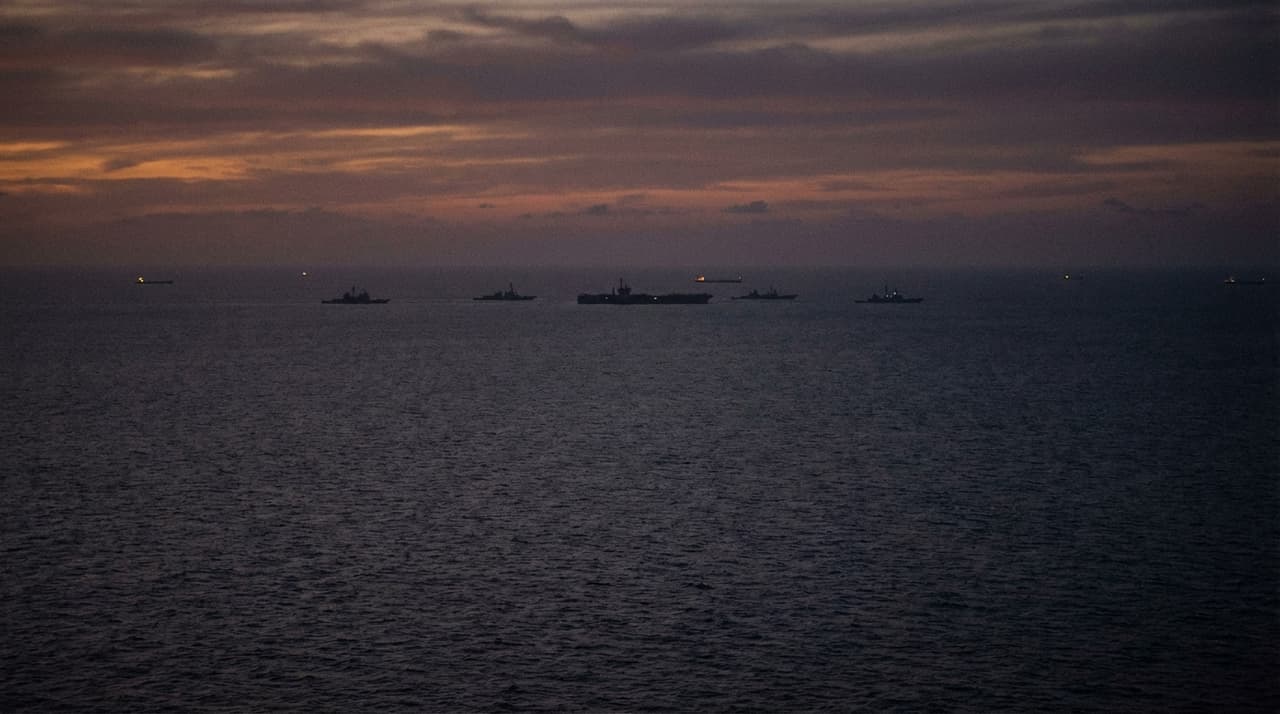
- Russian Foreign Minister Sergey Lavrov and Venezuelan Foreign Minister Yván Gil voiced serious concerns in a phone call about escalating US actions, including naval deployments and oil tanker seizures.
- The US has intensified operations with the USS Gerald R. Ford carrier strike group, seizing sanctioned vessels and threatening to designate Venezuela's government as a Foreign Terrorist Organization.
- Venezuela's oil-dependent economy faces heightened risks as tensions strain diplomatic efforts and regional alliances.
Heightened Tensions and Economic Fallout
In a phone conversation reported by TASS, Russian Foreign Minister Sergey Lavrov and Venezuelan Foreign Minister Yván Gil expressed serious concern over what they described as escalating actions by Washington in the Caribbean Sea. This comes amid a sharp increase in US naval operations, including the interception and seizure of crude oil tankers off Venezuela's coast and a blockade on sanctioned vessels. According to people familiar with the matter, these moves are part of a broader strategy to pressure the Maduro government, with the US also announcing plans to designate it as a Foreign Terrorist Organization (FTO).
Efforts to restructure Venezuela's debt and stabilize its economy have hit a snag, as these actions directly threaten the nation's oil exports, which are crucial for revenue. In mid-December 2025, US special forces from the USS Gerald R. Ford carrier strike group seized a sanctioned oil tanker, an operation that sources close to the situation say has created an "existential crisis" for Maduro's regime. Without a deal to ease sanctions, Venezuela could face further isolation from global markets, exacerbating its financial woes.
Diplomatic and Regional Implications
Diplomatic channels have largely frozen since October 6, when talks broke down after failed negotiations that offered US firms access to oil and gold in exchange for reduced ties to Russia, China, and Iran. Russia has condemned the US actions as "excessive military force," affirming its support for Venezuelan sovereignty. Meanwhile, regional stakeholders are divided: the Cuba-Venezuela-Nicaragua bloc labels the escalation an "imperialist offensive," while Guyana has endorsed the US moves amid ongoing territorial disputes with Venezuela.
Venezuela has mobilized over 4 million Bolivarian Militia troops and deployed naval assets around key oil hubs, seeking advanced air defense systems from Russia. In the US, lawmakers are questioning the legality of the operations, citing potential war crimes and lack of congressional approval. A source within the administration noted that the focus is on targeted actions rather than a full ground invasion, but the situation remains volatile.
Market and Future Outlook
Short-term risks include further tanker seizures and potential US targeted strikes inland, with CIA involvement targeting cartels. Analysts predict that pressure may mount for Maduro's top figures to relinquish power or face FTO designation, though experts deem a full invasion unlikely. The economic impact is already being felt, with Venezuela's oil revenue at risk and preliminary talks for Shell (SHEL)'s return to the region stalled. As one industry insider put it, "The regulatory stability investors seek is under threat, making any recovery uncertain."
Correction: An earlier version of this article misstated the date of the phone call; it occurred in late December 2025, as confirmed by sources.