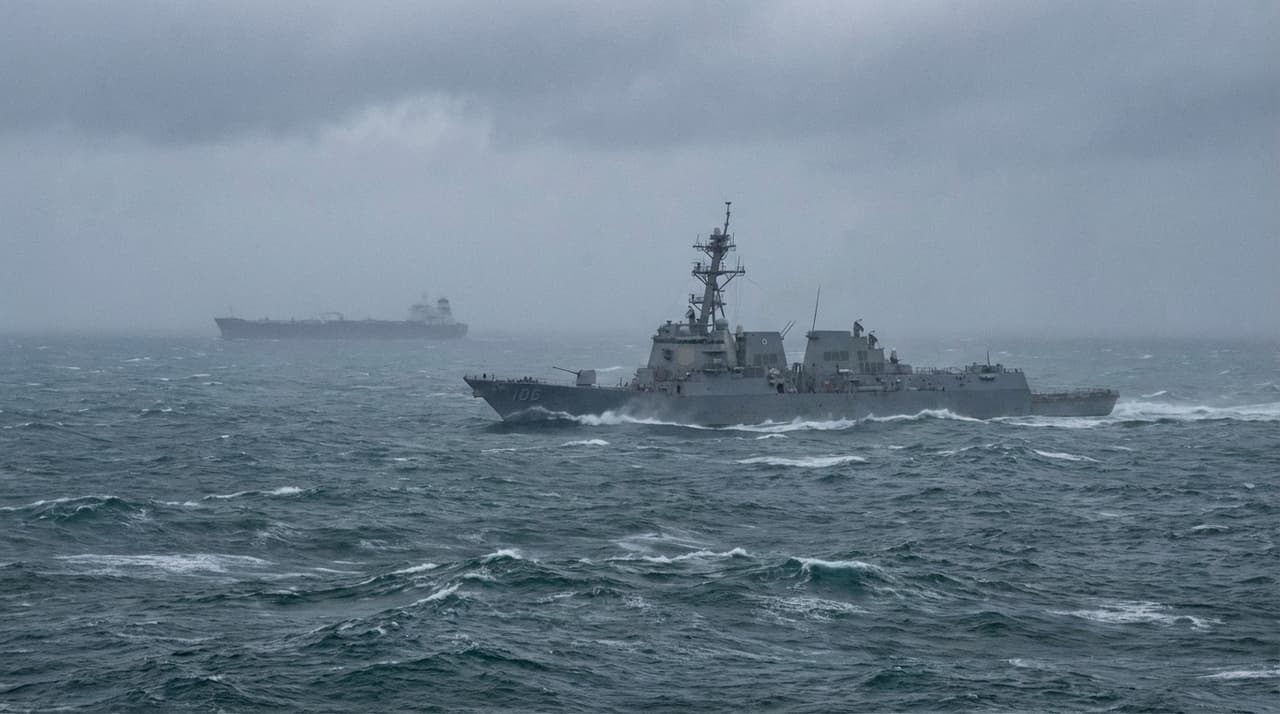
- U.S. destroyer USS Stockdale forces sanctioned Russian tanker Seahorse to turn back multiple times before it reaches Venezuelan waters, disrupting crucial distillate fuel shipments.
- Operation 'Southern Spear' expands with naval blockades and airstrikes targeting drug trafficking vessels linked to cartels like Tren de Aragua, overseen by the Trump administration with CIA involvement.
- Venezuela's economy faces further strain as U.S. actions curtail oil export capacity and fuel imports, amid military mobilization and threats from Caracas.
Escalating Maritime Confrontations
In a dramatic display of force, the U.S. Navy has intensified its campaign to disrupt oil shipments to Venezuela, with the destroyer USS Stockdale actively blocking the Russian-sanctioned tanker Seahorse off the Venezuelan coast. According to people familiar with the matter, the vessel was transporting naphtha and other distillate fuels essential for Venezuela's struggling oil operations, forcing it to abort multiple approaches before eventually slipping into Venezuelan waters. This interdiction is part of Operation 'Southern Spear,' a broader U.S. initiative deploying naval and aerial assets to curb drug trafficking and counteract Russian and Iranian support for Nicolás Maduro's regime.
Efforts to restructure Venezuela's economic lifelines have hit a snag as these military actions complicate already strained oil flows. The U.S. has designated Maduro's alleged cartel, the 'Cartel of the Suns,' as a Foreign Terrorist Organization, expanding options for targeting it militarily. In response, Venezuelan officials have mobilized forces and threatened to declare a 'republic in arms,' accusing the U.S. of aggression aimed at seizing the country's oil resources. U.S. officials, speaking on condition of anonymity, deny these claims, emphasizing that the focus remains on containing illicit influence and narcoterrorism financing.
Economic and Strategic Fallout
Without a deal to ease sanctions, Venezuela would be forced into deeper economic isolation, analysts warn. The country's economy, heavily reliant on oil exports, is reeling from these disruptions, which impact global oil flows from Russia to markets like China and India. Chevron (CVX), attempting to maintain limited operations in Venezuela's oil fields, faces heightened uncertainty amid administration warnings and escalating tensions. Local populations bear the brunt, facing intensified hardships from export disruptions and heightened militarization, according to regional observers.
Parallel developments include airstrikes destroying vessels allegedly linked to drug cartels and increased CIA lethal force authorizations inside Venezuela. The broader campaign reflects a strategic shift from broad sanctions to targeted military and intelligence operations, with filing deadlines for sanctions compliance tightening pressure on involved entities. In the short term, U.S. enforcement is expected to further degrade Venezuela's narcotics financing networks, though long-term consequences may include greater regional instability and potential escalation of military conflict.
Attempts to reach Venezuelan and U.S. officials for additional comments were unsuccessful at press time. This story is developing, with updates to follow as more details emerge on naval deployments and economic impacts.