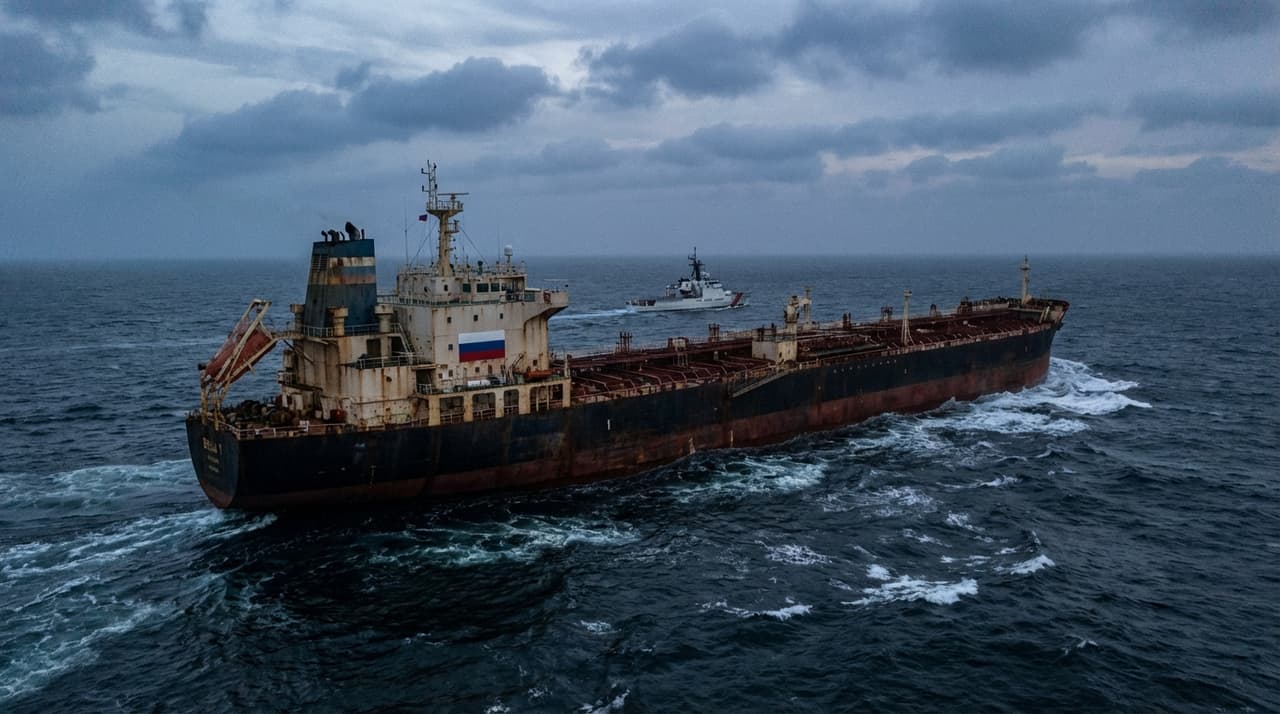
- The Bella 1 oil tanker has evaded U.S. Coast Guard pursuit for nearly two weeks after a Russian flag was painted on its hull, complicating seizure efforts under maritime law.
- The pursuit is part of the Trump administration's policy to pressure Venezuela by seizing sanctioned tankers, with the U.S. military deploying significant Caribbean resources for enforcement.
- The incident highlights the growing 'shadow fleet' of aging tankers transporting sanctioned oil, raising legal and diplomatic tensions as Russia and the U.S. navigate flag disputes.
A High-Stakes Maritime Chase
The Bella 1, an aging oil tanker, has been racing through the Atlantic Ocean for nearly two weeks, with U.S. Coast Guard vessels tracking it about a half-mile behind. According to people familiar with the matter, the pursuit began after the tanker made an unusual U-turn near Venezuela at full speed, refusing to be boarded. The vessel was under a judicial seizure order as a sanctioned tanker allegedly involved in shipping oil to U.S.-designated terrorist organizations, but the situation escalated when a Russian flag was painted on its hull in an apparent attempt to claim Russian protection. Coast Guard officials have orders to seize the tanker should the White House authorize the action, but the flag change has introduced legal complexities that are slowing decision-making.
Legal Gray Zones and Diplomatic Maneuvers
Under the U.N. Convention on the Law of the Sea, the Coast Guard has the right to board foreign vessels if they are stateless or engaged in deceptive practices. However, maritime law experts note that merely painting a flag on a hull does not grant a ship nationality, and ships cannot change flags mid-voyage unless there is a change of ownership or registration. Efforts to restructure the seizure have hit a snag as the U.S. works through diplomatic channels to verify whether the Bella 1 is actually registered in Russia. Without a clear resolution, the tanker could continue evading capture, potentially forcing the U.S. into a more aggressive stance. Russia has formally asked the United States to stop the pursuit, according to sources, adding a layer of international tension to the standoff.
Broader Implications for Sanctions Enforcement
This pursuit is part of the Trump administration's broader policy to economically pressure Venezuela by seizing sanctioned oil tankers—Venezuela's principal income source. Since December 10, the U.S. has seized two other tankers, the Skipper and Centuries, carrying Venezuelan oil. The military buildup includes a Maritime Special Response Team, an elite force trained to board hostile ships, marking the first significant Caribbean deployment in decades. Meanwhile, the Bella 1 is part of what experts call a 'shadow fleet'—a vast network of aging tankers with murky ownership connecting sanctioned oil from Russia, Iran, and Venezuela to buyers globally. An estimated 1,423 tankers operate with sanctioned oil from these countries, with 921 subject to U.S., British, or EU sanctions, highlighting the challenges in policing these waters.
Human Elements and Ongoing Developments
In a brief statement, a Coast Guard spokesperson said, 'We are monitoring the situation closely and adhering to international law,' though attempts to reach Russian officials for comment were unsuccessful. The tanker's crew has remained silent, with no reports of distress signals. As the chase continues, parallel developments include a Chinese-flagged vessel, the Thousand Sunny VLCC, set to arrive in Venezuela in mid-January to load crude oil, though it is not U.S.-sanctioned. Ukraine has also escalated attacks on Russia's shadow fleet tankers, targeting at least six in 2026 as part of efforts to disrupt Russian oil exports. The outcome hinges on whether Russia formally registers the vessel and diplomatic talks progress, with ongoing debate within U.S. agencies about forcibly seizing the empty, aging Bella 1.
Correction: An earlier version misstated the number of tankers seized since December 10; it is two, not three.