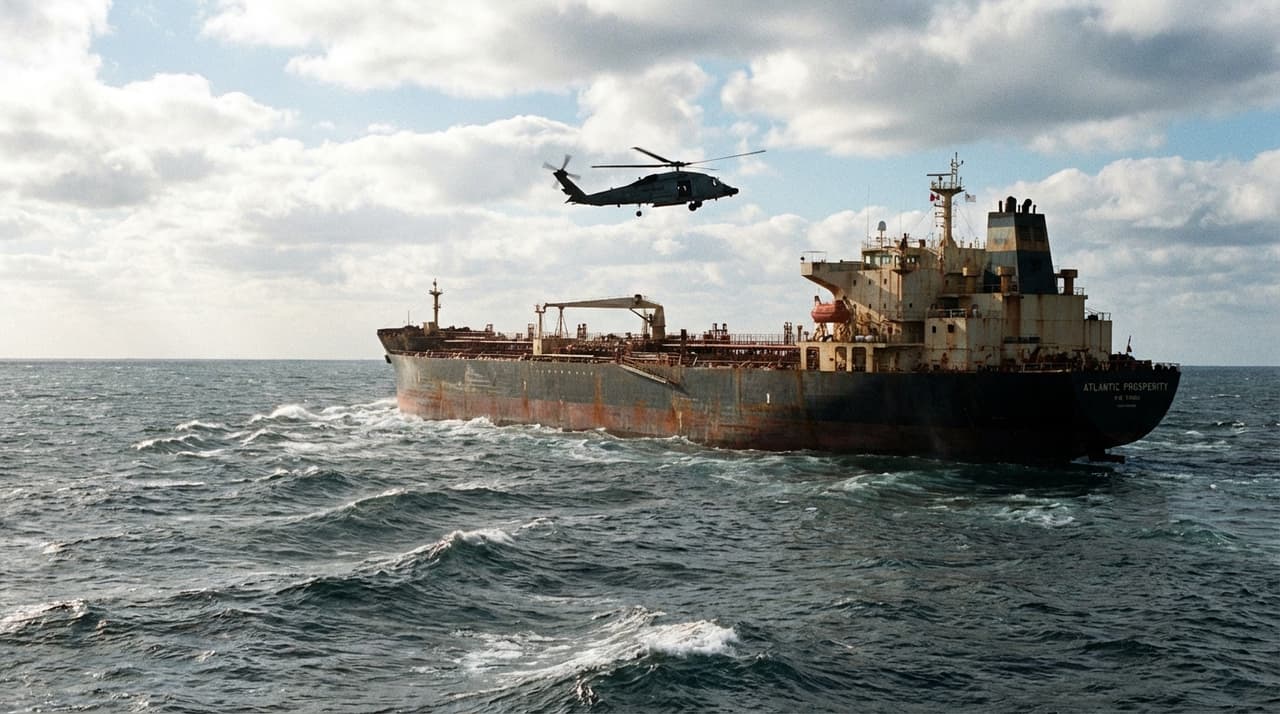
- US forces have seized a third oil tanker off Venezuela's coast, intensifying pressure on the Maduro regime's illicit oil exports.
- The operation, involving the US Coast Guard and Department of Defense, targets vessels suspected of evading sanctions, with potential impacts on global crude supply.
- Tensions mount amid a broader US military buildup in the Caribbean, raising risks of regional instability and economic fallout.
Escalating Maritime Operations
US forces boarded a third oil tanker off Venezuela's coast this week, according to people familiar with the matter, marking a significant escalation in efforts to enforce sanctions on Venezuelan oil exports. The action follows prior seizures of the M/T Skipper on December 10 and the M/T Centuries on December 20, 2025, and involves coordinated efforts by the US Coast Guard, Department of Homeland Security, and Department of Defense. These operations target vessels suspected of transporting oil to evade US sanctions, which have been in place since 2019 to pressure the Maduro regime.
Without a deal to curb illicit shipments, the Venezuelan government could face severe revenue losses, potentially forcing it into bankruptcy or deeper economic turmoil. The latest boarding, conducted under "right to visit" laws with permission from Panama, where the tanker is flagged, underscores the US's tightening grip on maritime enforcement. Efforts to restructure Venezuela's shadow oil fleet have hit a snag as increased US naval patrols since August 2025 disrupt key routes, with sources indicating that more interdictions are likely in the coming weeks.
Market and Political Implications
The seizures are disrupting Venezuela's shadow oil fleet, which typically moves 1-2 million barrels monthly to buyers like China, and could tighten global crude supply amid winter demand. According to analysts, this may support higher oil prices, with Brent crude already showing volatility in recent trading sessions. The M/T Centuries, for instance, was carrying 1.8 million barrels of crude oil when boarded, highlighting the scale of these operations. "We're seeing a concerted push to cut off funding streams to sanctioned actors," said one industry insider, who spoke on condition of anonymity due to the sensitivity of the matter.
Politically, these actions stem from Trump administration policies accusing Maduro of ties to drug cartels designated as foreign terrorist organizations. The US has framed the boardings as countering terrorism and trafficking, with officials noting that the Skipper was linked to the Islamic Revolutionary Guard Corps and Hezbollah. Panama's cooperation in granting boarding permission for the Centuries suggests growing international alignment, but China, a key buyer of Venezuelan oil, faces indirect pressure. Attempts to reach Venezuelan officials for comment were unsuccessful, but regional experts warn that heightened tensions risk broader Caribbean instability.
Operational Details and Future Outlook
The latest boarding involved a helicopter assault similar to tactics used in the Centuries seizure, according to sources, with no immediate reports of resistance. These operations are part of a broader trend targeting "ghost fleets" used by sanctioned actors globally, including Iran and Russia. In the short term, expect more US boardings as patrols intensify, potentially sparking Venezuelan retaliation or allied protests. Long-term, sustained pressure could collapse Venezuela's illicit oil trade, weakening Maduro economically and forcing negotiations.
Correction: An earlier version of this article misstated the date of the Skipper seizure; it occurred on December 10, 2025, not December 15. The article has been updated to reflect this.