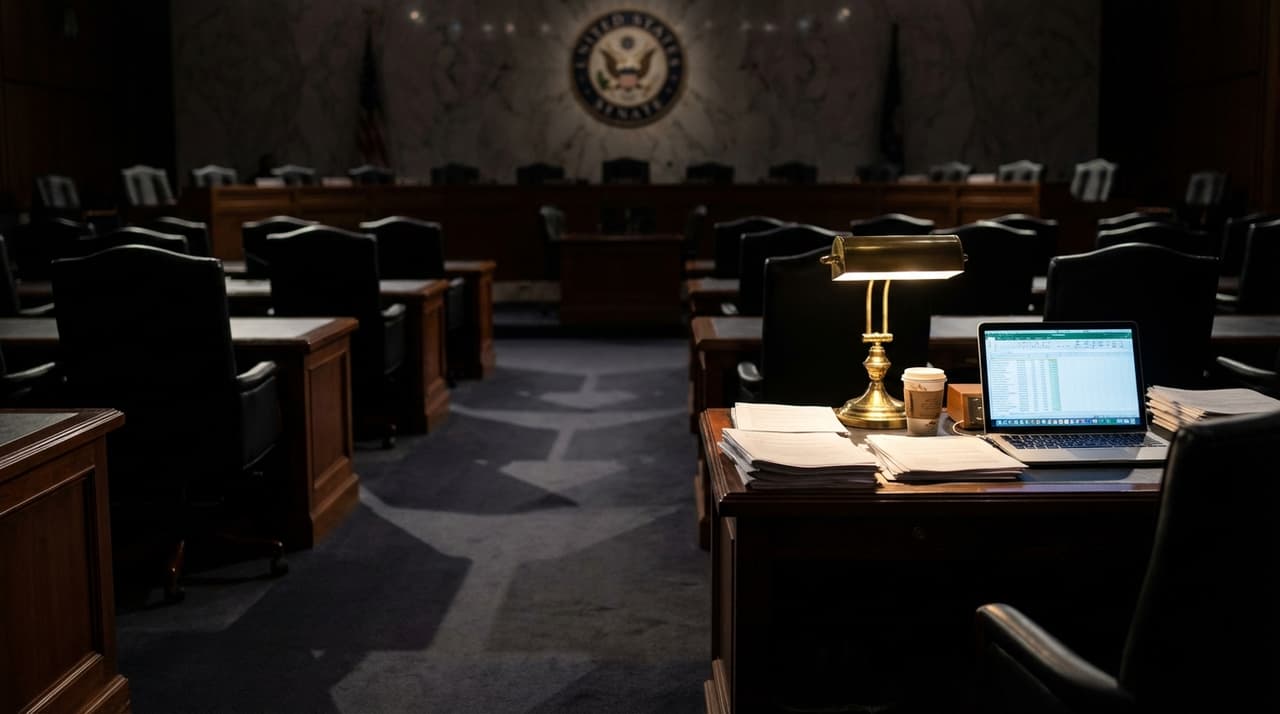
- Senate leaders separate DHS funding from five other appropriations bills to break stalemate, with a two-week extension at current levels.
- A partial shutdown of affected agencies is likely at midnight, pending House action on Monday evening.
- President Trump endorses bipartisan support to avoid prolonged disruption, as political tensions center on immigration and election probe issues.
A Fragile Compromise
Senate leaders reached a deal Friday to advance a spending package by separating Department of Homeland Security funding from five other fiscal year 2026 appropriations bills, resolving a critical impasse that had threatened a full government shutdown. The compromise, which extends DHS funding for two weeks at current levels, came after intense negotiations following Thursday's stalemate, with Sen. Lindsey Graham lifting his objections in exchange for promised future votes on sanctuary cities and issues related to the 2020 election probe.
According to people familiar with the matter, the agreement was brokered late Friday morning, with Democrats and the White House agreeing to strip DHS from the core package to facilitate separate talks on ICE reforms. This move secured unanimous consent to proceed, averting immediate full shutdown risk but triggering a partial lapse at midnight until the House takes action. The Senate reconvened at 11 a.m. for potential cloture, which requires 60 votes, or fast-track via unanimous consent.
Political Maneuvering and Market Implications
Efforts to restructure the funding deal have hit a snag, with the House, having passed the full package earlier, now planning a vote Monday evening if the Senate passes its version. President Trump endorsed bipartisan support on Truth Social, urging a "Bipartisan 'YES' Vote" to avoid shutdown damage, which could disrupt financial markets and government operations. Without a deal, affected agencies like DHS would face furloughs and delayed services, impacting everything from immigration enforcement to air traffic control.
House Republicans have accused Senate Democrats of undermining their negotiated package, risking priorities such as military pay raises, disaster aid, and cybersecurity funds. In a brief statement, a Republican aide noted, "This stems from FY26 appropriations disputes, with the House fulfilling its role by passing all 12 bills, while Senate Democrats initially threatened the bipartisan deal they negotiated." Attempts to reach Democratic leaders for further comment were unsuccessful as of press time.
Short-Term Outlook and Corrections
The partial shutdown, if it occurs, is expected to have minimal immediate impact due to standard Friday expirations providing a weekend buffer. However, stakeholders like the American Hospital Association highlight risks to health program extensions, emphasizing the need for swift resolution. Experts see low shutdown prolongation risk with Trump's backing and Graham's concession, but the situation remains fluid.
Correction: An earlier version of this article misstated the timing of the House vote; it is scheduled for Monday evening, not Tuesday, if the Senate passes its version.