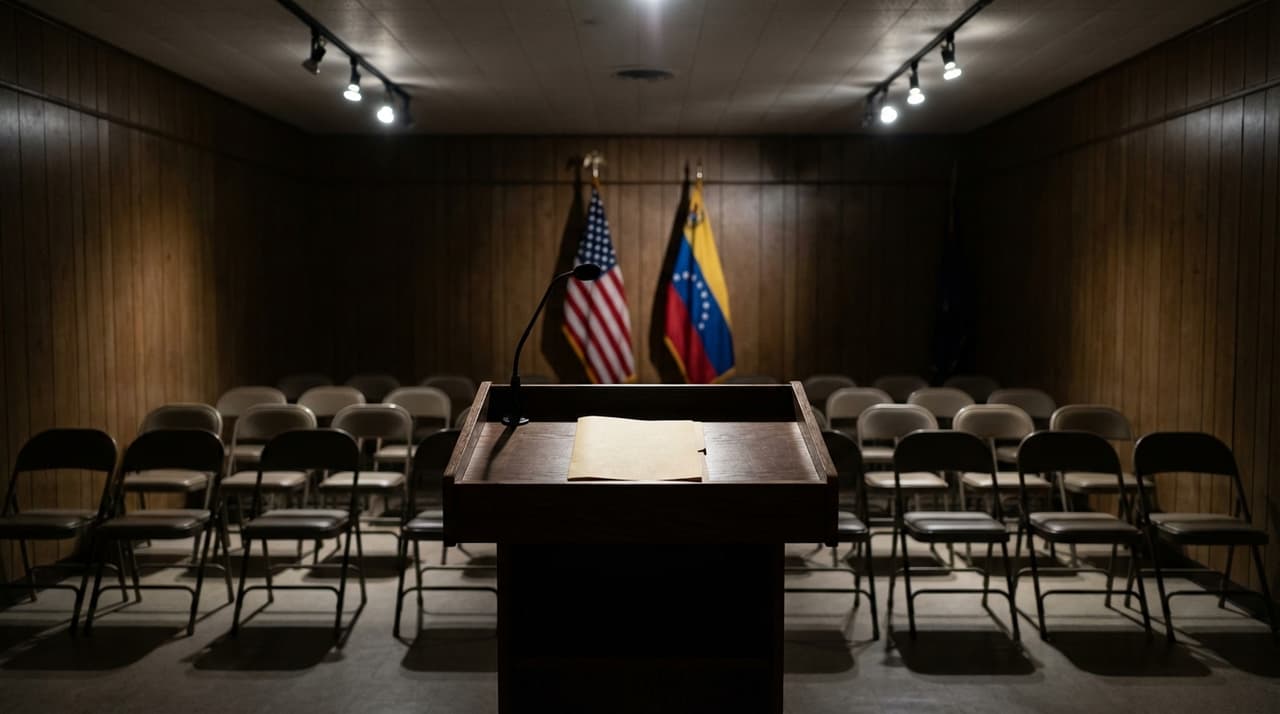
- U.S. special forces captured Venezuelan President Nicolás Maduro and his wife in a ground operation on January 3, 2026, with no U.S. casualties reported.
- President Trump stated the U.S. will temporarily govern Venezuela to ensure a stable power transition and deploy major U.S. oil companies to rebuild its collapsed oil infrastructure with tens of billions in investment.
- The move aims to revive Venezuela's oil sector, which Trump described as "completely ruined" under Maduro, while warning of potential further strikes if needed.
In a press conference at Mar-a-Lago, President Trump outlined plans for a temporary U.S. administration in Venezuela, following the capture of President Nicolás Maduro and his wife by U.S. special forces earlier this week. The operation targeted Caracas military sites, including Fuerte Tiuna and La Carlota airbase, according to people familiar with the matter. Trump emphasized that this is not a regime change effort but a measure to secure a "peaceful power transition" and prevent hostile takeovers, with U.S. troops stationed for stabilization.
"We will take time to hand over operation of Venezuela," Trump said, citing the need to rebuild infrastructure that has been neglected under Maduro's rule. He highlighted that Venezuela's oil industry, once a major global producer, is producing far below capacity due to nationalization and mismanagement, which he framed as "stolen" American assets from past socialist policies. The plan involves deploying U.S. oil firms to invest tens of billions of dollars to restore infrastructure, generate revenue, and boost U.S. energy security by accessing Venezuela's vast reserves amid ongoing oil market volatility.
Secretary of State Marco Rubio, Defense Secretary Pete Hegseth, and JCS Chairman Dan Caine were present at the announcement, underscoring the operation's strategic importance. Trump praised Venezuelan forces' cooperation, suggesting internal support, but warned of a potential "bigger attack" to secure operations if necessary. This follows months of escalating U.S. actions, including naval blockades, tanker seizures linked to sanctioned oil from Iran, and airstrikes on drug facilities, as part of Trump's "war on drugs" pressures on narco-transit routes. Maduro is expected to face trial in New York on charges related to narco-trafficking and election fraud, according to sources.
Globally, the move could strain U.S.-Latin America ties, with Venezuela labeling it "piracy," and risks short-term disruptions from military presence. However, Trump argued it promises stability and freedom for Venezuelan civilians, with opposition figures like María Corina Machado reporting strikes on regime sites that may aid pro-democracy shifts. Analysts note parallels to past U.S. interventions like Panama 1989, though Trump denies regime change intent, focusing instead on economic revival through oil sector investments. Without this deal, experts warn, Venezuela's economy could remain in collapse, but the long-term outlook includes a power transition to pro-U.S. leadership and reduced drug transit.
Attempts to reach Venezuelan officials for comment were unsuccessful. In related developments, U.S. strikes on Venezuelan drug routes have shifted from sea-to-land operations, with prior delays due to other military engagements. The situation remains fluid, with market watchers eyeing potential impacts on global oil supply chains.