- U.S. military strike in Venezuela captures President Nicolás Maduro and his wife, flown out of the country
- Operation conducted without congressional approval, drawing immediate political criticism
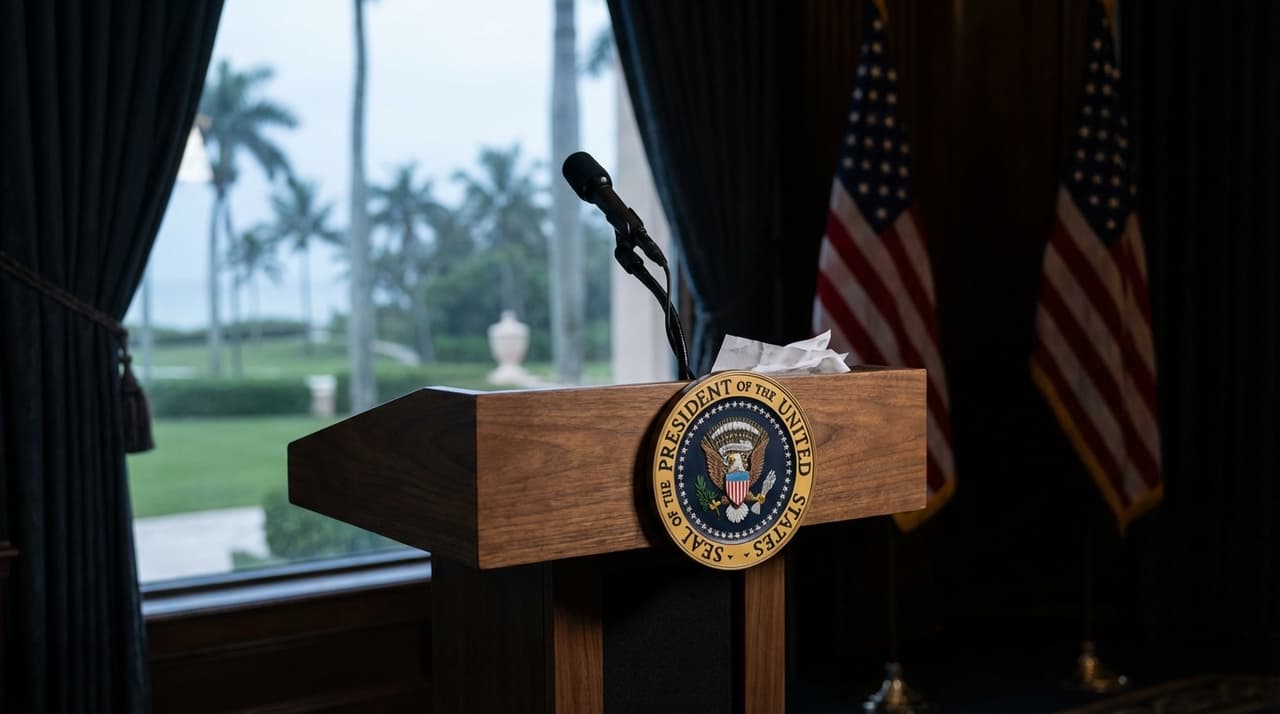
- Press conference scheduled for 11 a.m. from Mar-a-Lago to outline transition plans and broader foreign policy
President Donald Trump announced early on January 3, 2026, that U.S. forces successfully conducted a large-scale military operation in Venezuela, resulting in the capture of President Nicolás Maduro and his wife. The operation involved coordinated strikes on Venezuelan facilities, according to Trump's social media post and subsequent comments to The New York Times, where he described it as "a complete success." The captured leaders were reportedly flown out of the country, though specific locations remain undisclosed.
Efforts to restructure Venezuela's political landscape have hit a critical juncture, with Trump stating the U.S. will "run the country until such time as we can do a safe, proper and judicious transition." This development follows explosions reported in Caracas and aligns with a scheduled White House-related press event. Without a clear transition plan, analysts warn Venezuela could face prolonged instability or power vacuums.
According to people familiar with the matter, the operation leveraged U.S. law enforcement and military assets, though specific units involved haven't been confirmed. Defense Priorities, a foreign policy think tank, immediately noted risks of regime change without legislative buy-in, highlighting potential constitutional concerns. A senior administration official, speaking on condition of anonymity, emphasized that "all actions were taken within existing authorities," but declined to specify which legal frameworks were invoked.
Market reactions were muted in early trading, though oil futures showed slight volatility given Venezuela's substantial petroleum reserves. The country's crisis has long involved disputes over oil resources, with U.S. claims of stolen assets cited as partial justification for the intervention. One energy analyst noted, "Any prolonged disruption could tighten global supplies, but much depends on how quickly production can be stabilized under new management."
Political fallout emerged immediately, with Democratic Representative Jennifer Wexton criticizing the operation's risks to U.S. troops deployed elsewhere, including in Gaza and near Iran. "This unilateral action sets dangerous precedents and diverts resources from other strategic priorities," she said in a statement. The White House hasn't responded to multiple requests for comment on the congressional approval process.
Trump's press conference from his Palm Beach estate is expected to provide more details about the transition timeline and potentially link to other administration actions, including a proposed Russia-Ukraine peace plan framework announced the same day. That diplomatic initiative, ahead of anticipated responses from Russian President Vladimir Putin, represents another layer of Trump's foreign policy push.
Meanwhile, separate domestic announcements are creating parallel economic narratives. Health and Human Services Secretary RFK Jr. proposed $50 billion in rural health care funding alongside price transparency rules, which could boost rural economies. Simultaneously, immigration policy shifts took effect January 1, 2026, including travel bans barring visa issuance for certain nationalities and doubling oral questions for green card applicants—changes that may impact labor markets and remittances from the Venezuelan diaspora.
Venezuelan stakeholders face immediate uncertainty, with some analysts pointing to potential democracy gains while others warn of escalation risks. "The immediate priority is establishing a credible interim authority," said one Latin America expert who requested anonymity due to the sensitivity of ongoing developments. U.S. public reactions appear split along familiar political lines, with Trump supporters hailing the action as anti-authoritarian and critics warning of executive overreach.
Historically, Trump's first term saw pressure on Maduro through sanctions for alleged drug trafficking and authoritarian practices—this military action marks a significant escalation from diplomacy to direct intervention. Parallels to prior U.S. operations like the 1989 Panama invasion have surfaced in policy circles, often recalling criticisms about long-term fallout without thorough planning.
Looking ahead, short-term scenarios range from negotiated ceasefires to violent power struggles in Venezuela. The 11 a.m. press conference may clarify transition mechanisms, though risks of retaliation or regional unrest persist. Long-term, the operation could facilitate U.S. access to Venezuelan oil but invites geopolitical blowback, particularly in relations with Russia and China, according to Defense Priorities analysis.
Correction: An earlier version misstated the timing of immigration policy changes; travel bans took effect January 1, 2026, not January 3.