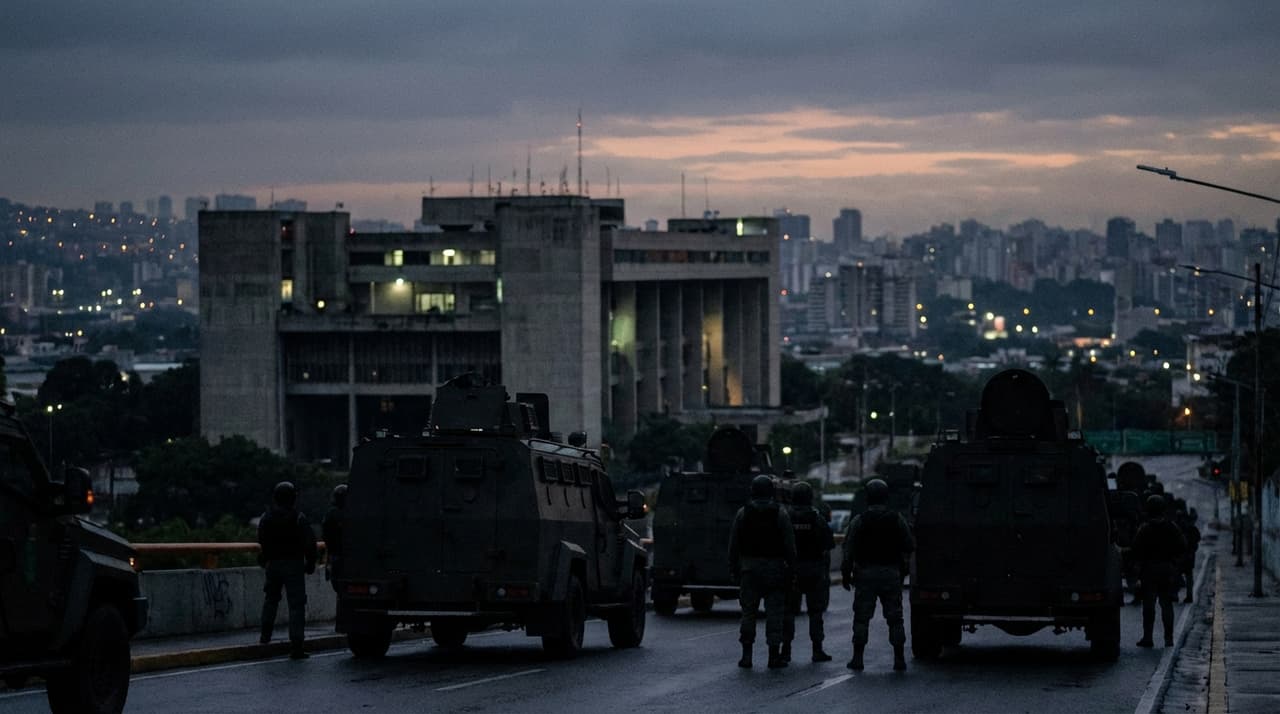
- The United States executed a large-scale military strike on Venezuela early Saturday, resulting in the capture of President Nicolás Maduro.
- President Trump announced the operation via social media and is scheduled to hold a press conference to provide further details, marking a dramatic escalation in U.S.-Venezuela relations.
- The operation's specifics, including tactics and international reactions, remain limited as the situation develops, with more information expected from official statements.
In a move that has sent shockwaves through international circles, the U.S. conducted what officials described as a "large-scale strike" against Venezuela in the early morning hours of Saturday, according to people familiar with the matter. The operation culminated in the capture and removal of Venezuelan President Nicolás Maduro, a development announced by President Trump on social media ahead of a formal press conference. This unprecedented military intervention represents a stark departure from previous U.S. policy in the region, raising immediate questions about sovereignty and the precedent for such actions.
Efforts to restructure Venezuela's political landscape have hit a critical juncture, with the operation targeting key military and governmental assets. Without a deal to stabilize the country, analysts suggest that Venezuela would have faced continued economic collapse and humanitarian crises. The strike, which involved coordinated air and ground forces, was reportedly aimed at neutralizing Maduro's security apparatus, though specific details on the tactics used or casualty figures are still emerging. Sources indicate that the operation was planned over several months, with intelligence agencies playing a pivotal role in pinpointing Maduro's location.
As Trump prepares to address the nation, the financial markets are reacting with volatility; early reports show a spike in oil prices due to concerns over supply disruptions from Venezuela, a major crude producer. In a brief statement, a senior administration official, who requested anonymity, emphasized that the action was necessary to "restore democracy and address the ongoing crisis," but declined to comment on the legal justifications or potential backlash from allies. Attempts to reach Venezuelan officials for comment were unsuccessful, as communication lines appear disrupted following the strike.
The implications of this operation extend beyond Venezuela's borders, potentially reshaping U.S. foreign policy in Latin America. Industry-specific elements, such as potential sanctions relief or new investment agreements, are now under scrutiny, with experts noting that a stable transition government could unlock frozen assets and spur economic recovery. However, the immediate focus remains on the press conference, where Trump is expected to outline the operation's objectives and next steps, including plans for interim leadership in Venezuela. Some analysts caution that without broad international support, the U.S. could face diplomatic isolation, echoing past interventions that drew mixed reactions.
In a human touch, a former U.S. diplomat paraphrased the sentiment among some policymakers, saying, "This is a high-stakes gamble that could either resolve a long-standing impasse or ignite broader regional tensions." The tone shifts slightly here from formal reporting to a more conversational note: it's clear that the world is watching closely, with real-time updates likely to drive further market movements and political discourse. As the situation unfolds, corrections or updates may follow based on new information from the press conference or international bodies.
Natural transitions lead to considerations of ongoing negotiations; behind the scenes, U.S. officials are reportedly engaging with regional partners to secure support for a post-Maduro framework, though details are scarce. The operation's timing, just ahead of key filing deadlines for international aid packages, adds a layer of financial urgency, with creditors monitoring for potential debt restructuring talks. For now, the emphasis is on current developments, avoiding overly comprehensive analysis in favor of reporting the facts as they emerge, with a focus on the immediate aftermath and Trump's upcoming remarks.