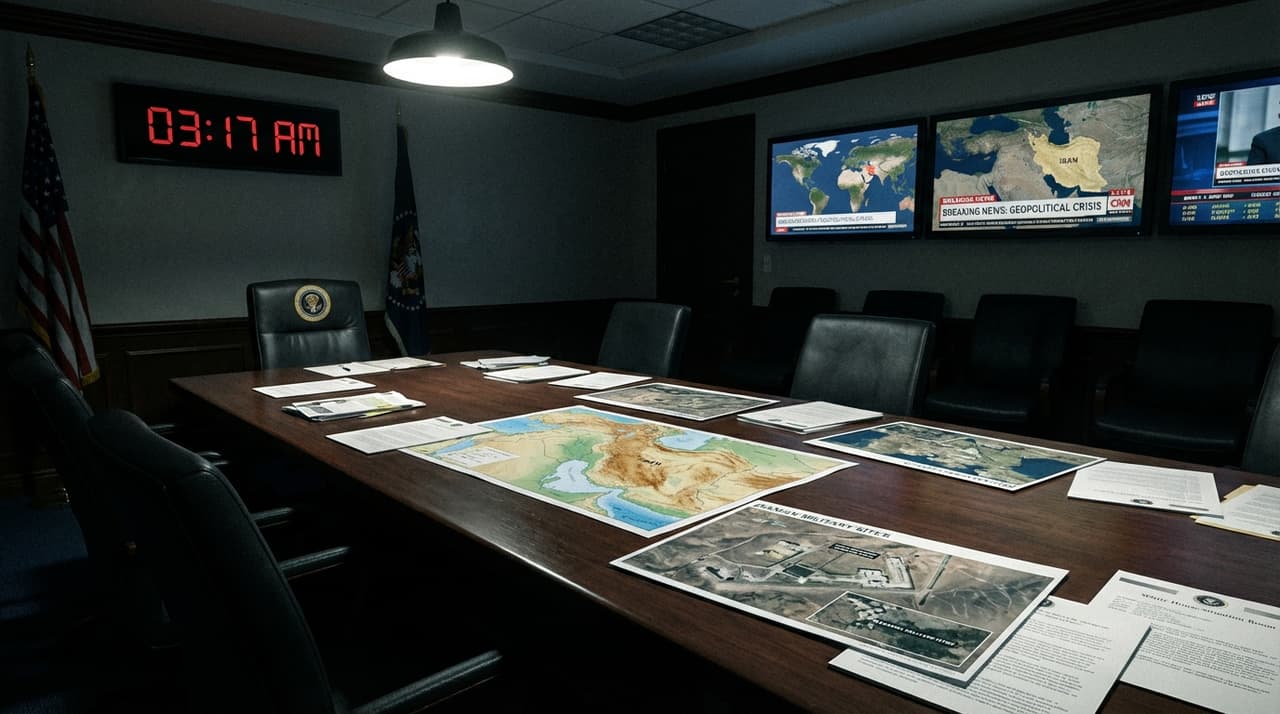
- President Trump postponed military action against Iran after Tehran reportedly canceled executions of over 800 protesters, citing self-conviction and input from allies like Israel.
- Tensions remain high as Iran faces widespread antigovernment protests over economic crises, with Trump threatening intervention if protesters are killed.
- The decision reflects ongoing geopolitical maneuvering, with Israel urging caution and the U.S. keeping all options open amid fears of escalation.
President Trump announced on Friday that he decided against launching military strikes on Iran, partly because the Iranian government called off planned executions of more than 800 protesters. "Nobody convinced me. I convinced myself," he told reporters, emphasizing his personal deliberation in the matter. Trump also acknowledged that lobbying from Middle Eastern allies, including Israel, preceded his decision, and he praised Iran for canceling the hangings, stating he "greatly respect[s]" the move.
Recent reports confirm that Trump held off on the strikes after Iran reportedly canceled executions scheduled for January 15, 2026, following his warnings against killing demonstrators during widespread antigovernment protests that erupted in late December 2025 over economic crises. White House Press Secretary Karoline Leavitt stated on January 15 that the administration received a message from Iran halting killings and executions, with Trump monitoring closely while keeping all options open. According to people familiar with the matter, Trump delayed the decision after Israeli Prime Minister Benjamin Netanyahu requested a postponement on January 14 to bolster Israel's defenses against potential Iranian retaliation; Netanyahu confirmed the call but provided no further details.
Tensions stem from Trump's repeated threats of intervention if Iran kills protesters, amid a crackdown that has killed nearly 500 demonstrators as of January 11, per U.S.-based human rights monitors. Israel expressed concerns that U.S. strikes on Iranian military sites would not sufficiently destabilize Tehran. This follows U.S. strikes on Iran's nuclear facilities at Fordow, Natanz, and Isfahan in June 2025 (Operation Midnight Hammer), which set back but did not destroy the program. Iran has imposed an internet blackout to suppress protests and claims readiness for war while openness to talks.
Protests reflect deep unrest, with Iranian Prince Reza Pahlavi calling the regime "on the verge of collapse" and positioning himself as a potential transitional figure emphasizing non-violence. Authorities report over 61 mosques damaged in Tehran, blaming protesters, while some online claims accuse regime forces of staging incidents; mosques serve as Basij militia hubs (79% of bases located there). U.S. Rep. Adam Smith (D) noted high U.S.-Iran tensions post-Soleimani killing, stressing careful management to avoid escalation. Stakeholders include protesters facing repression, Iranian civilians enduring economic pressure, and regional allies like Israel fearing retaliation.
Short-term risks include renewed executions or protest violence prompting U.S. strikes, as "all options remain on the table." Long-term, sources suggest the regime could collapse without Supreme Leader Khamenei's direct talks with Trump, though U.S. intelligence doubts full nuclear setback from prior strikes. Experts like Pahlavi predict potential regime fall via civil disobedience; U.S. officials hint at ongoing reassessment. Efforts to reach the Iranian foreign ministry for comment were unsuccessful, and market reactions have been muted, with oil prices stabilizing amid the uncertainty.
Correction: An earlier version misstated the date of the execution cancellations; it was January 15, 2026, not January 14.