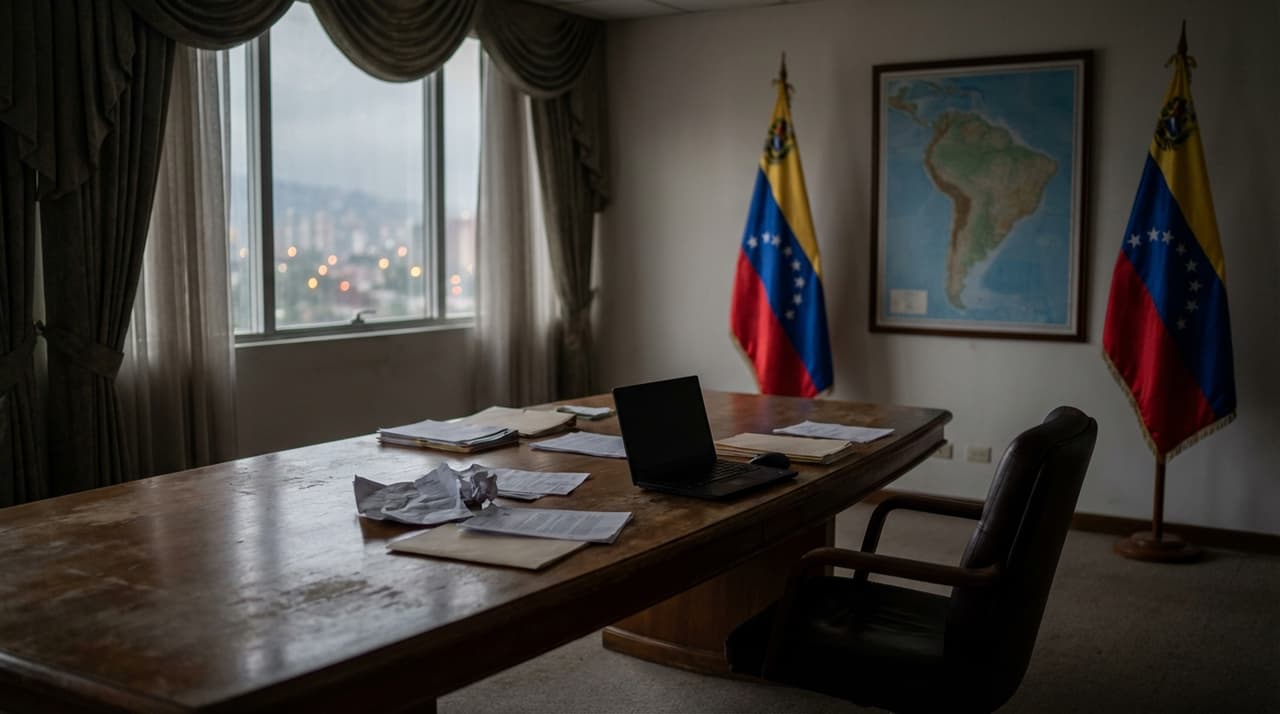
- U.S. forces capture Venezuelan President Nicolás Maduro and his wife Cilia Flores in a military strike on Caracas, as announced by President Donald Trump, with both now in U.S. custody facing charges.
- Maduro loyalists, including Defense Minister Vladimir Padrino and Vice President Delcy Rodríguez, vow to resist, signaling potential regime continuity despite the leadership decapitation.
- The move, linked to Venezuela's world-largest proven oil reserves, could reshape global energy markets and dollar dominance, amid escalating U.S.-rival tensions with China and Russia condemning the action.
A Swift Strike and Immediate Fallout
U.S. forces conducted a targeted military operation in Caracas, capturing Nicolás Maduro and his wife Cilia Flores, according to a social media post by President Donald Trump. A photograph circulating online shows Maduro in DEA custody, though Venezuelan officials have demanded proof of life. "This is about ending narco-terrorism and securing American interests," Trump stated, referencing prior military buildup in the Caribbean and deportation flights that pressured Maduro's regime. The strike, executed without warning, has thrown Venezuela into turmoil, with Defense Minister Vladimir Padrino declaring no surrender and framing it as a broader confrontation against foreign intervention.
Efforts to restructure Venezuela's debt and stabilize its economy have hit a snag with this development. The country's oil production had plummeted to under 400,000 barrels per day under Maduro, down from earlier highs, due to economic collapse marked by a 71% shrinkage from 2012 to 2020 and hyperinflation over 130,000%. Recent U.S. sanctions relief allowed Chevron to restart operations as a lifeline, but without a deal for succession, the nation risks descending into civil war or prolonged instability. According to people familiar with the matter, U.S. officials are closely monitoring oil markets for pricing shifts, as gaining influence over Venezuela's reserves could bolster dollar dominance and reduce reliance on Middle East oil amid West Asia tensions.
Loyalist Resistance and Global Repercussions
Maduro loyalists are digging in, with Vice President Delcy Rodríguez vowing to resist what she called an "illegal aggression." This defiance complicates any quick transition, as the regime's structure remains largely intact despite the leadership decapitation. In the hours following the capture, global tensions spiked, with China and Russia condemning the action—China as disrupting energy ties, noting an envoy was in Caracas pre-strike, and Russia labeling it aggression. These reactions could escalate U.S.-rival frictions, testing precedents for intervention in Latin America. Analysts note that armed forces-managed succession might reinforce existing structures rather than pave an easy path to democracy, with stakeholders like oil-dependent economies and millions of Venezuelan migrants facing heightened uncertainty.
Market watchers are bracing for volatility. "The capture may spark power struggles that drain resources and complicate U.S. focus on other regions," said one financial strategist, who requested anonymity due to the sensitivity of the situation. Real-time data shows slight upticks in oil futures, but the full impact hinges on whether loyalists can consolidate control or if U.S. ground operations escalate to remove thousands of Maduro backers. Historical context adds weight: Maduro rose from Hugo Chávez's protégé in 1999's socialist revolution, perpetuating anti-U.S. rhetoric and economic mismanagement that drove 7.7 million migrations and mass poverty. Prior Trump sanctions aimed at regime change yielded partial concessions, but repression intensified, including ICC probes for crimes against humanity and bans on opposition figures like María Corina Machado.
Looking ahead, the short-term risk is a quagmire, with experts predicting that without clear succession planning, refugee crises or civil war could erupt. Long-term, potential oil access for the U.S. offers strategic advantages, but it's a delicate balance—global rivals like Iran are watching closely, and any misstep could fuel broader conflicts. As one industry insider put it, "This isn't just about Venezuela; it's a test of how energy markets and geopolitical alliances will shift in a fractured world." Attempts to reach Venezuelan officials for further comment were unsuccessful, underscoring the fluid nature of this breaking story.