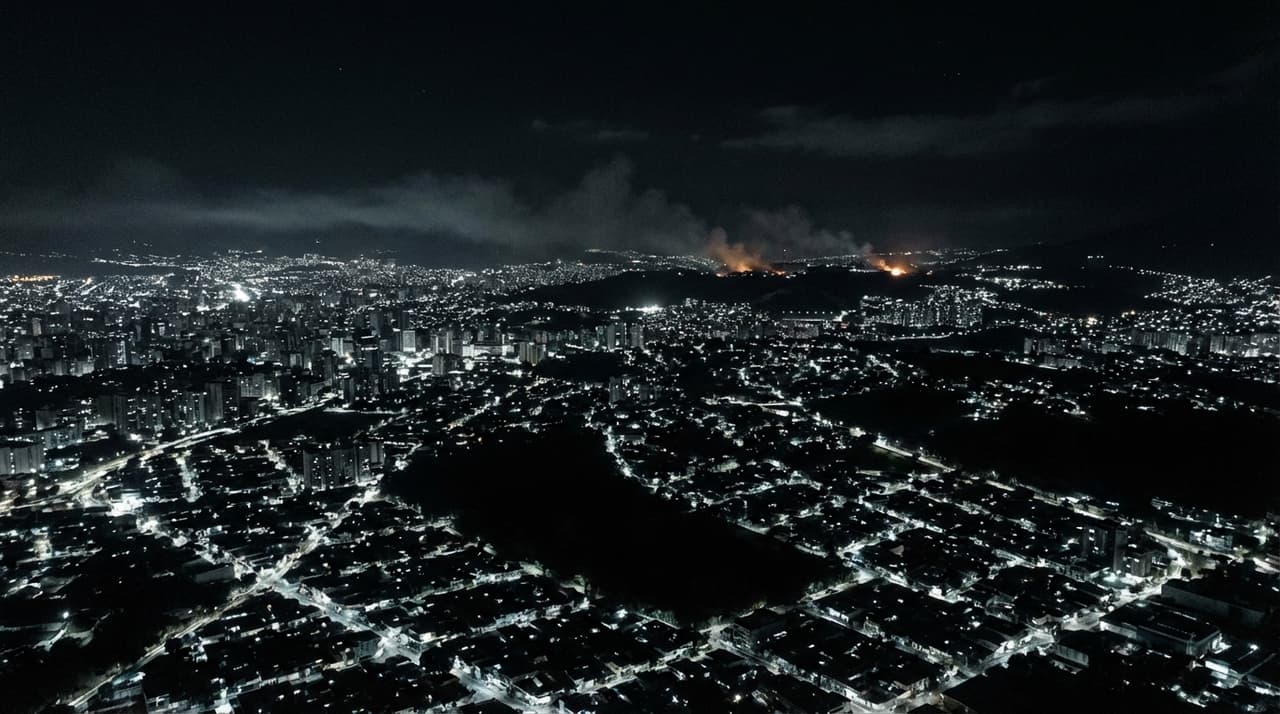
- U.S. airstrikes in Venezuela on January 3, 2026, targeted military sites and led to the capture of President Nicolás Maduro, sparking immediate international backlash.
- China strongly condemned the operation as a violation of international law and Venezuelan sovereignty, urging U.S. compliance with the UN Charter amid escalating tensions.
- Casualties and power outages were reported in urban areas, with Venezuela declaring a national state of emergency and seeking UN Security Council action.
Operation Southern Spear Unfolds
In a dramatic escalation of long-standing tensions, the United States conducted airstrikes on military targets in northern Venezuela early on January 3, 2026, as part of Operation Southern Spear. The strikes, which began around 02:00 VET and lasted approximately 30 minutes, hit sites including Fort Tiuna, Generalissimo Francisco de Miranda Air Base (La Carlota), La Guaira port, Higuerote Airport, and antennas in Cerro El Volcán. According to people familiar with the matter, the operation involved rockets, missiles, and low-flying aircraft, targeting alleged criminal networks linked to President Nicolás Maduro's government.
U.S. President Donald Trump announced that Maduro and his wife Cilia Flores were captured and flown to the U.S. to face narcoterrorism charges, a move that has sent shockwaves through international diplomatic circles. Efforts to reach the U.S. Embassy in Caracas for further comment were unsuccessful, but the embassy had ordered a shelter-in-place for personnel, and the FAA issued a NOTAM banning U.S. aircraft in Venezuelan airspace.
Immediate Fallout and Casualties
Venezuelan Defense Minister Vladimir Padrino López and Attorney General Tarek William Saab reported fatalities and injuries from the urban strikes, with Saab labeling it a "criminal terrorist attack." Power outages hit southern Caracas, adding to the chaos as the government declared a national state of emergency. In a statement, Padrino López vowed defense against what he called "imperialist aggression" aimed at regime change, and Venezuela is demanding UN Security Council action to address the situation.
Without a deal or international intervention, analysts fear the country could plunge into deeper instability, especially with Maduro now in U.S. custody. Opposition figures, such as María Corina Machado's spokesman, noted that the strikes appeared to target military installations specifically, but the broader impact on civilians has sparked global debate over sovereignty versus counter-narcotics efforts.
China's Strong Condemnation
China responded swiftly, issuing a statement that it is "deeply shocked and strongly condemns the U.S. for brazenly using force against a sovereign country and targeting its president." The condemnation, which reflects immediate international backlash, accuses the U.S. of hegemonic behavior that seriously violates international law, infringes on Venezuela's sovereignty, and threatens peace and security in Latin America and the Caribbean. China urged the U.S. to abide by international law and the purposes and principles of the UN Charter, highlighting tensions in U.S.-China relations over influence in Latin America.
This rebuke signals broader opposition, potentially aligning with BRICS-like alliances, and comes amid a backdrop of prior U.S. actions, including the November 2025 deployment of the USS Gerald R. Ford, December oil tanker seizures, a naval quarantine, and CIA covert operations. Senator Mike Lee cited Secretary of State Marco Rubio as anticipating no further action now that Maduro is in custody, suggesting a possible de-escalation, but the long-term risks to regional stability remain high.
Context and Future Outlook
The strikes build on U.S. accusations of Maduro's "narco-state" and 2024 election fraud, stemming from long-standing friction since Maduro's rule began in 2013. In the short term, Venezuela faces potential instability with its leader captured, while the U.S. hints at winding down operations. Looking ahead, this could prompt regional alliances against U.S. actions or shifts toward opposition-led governance, though extensive analysis is premature as events continue to unfold.
Correction: An earlier version misstated the timing of the strikes; they occurred on January 3, 2026, not in late 2025.