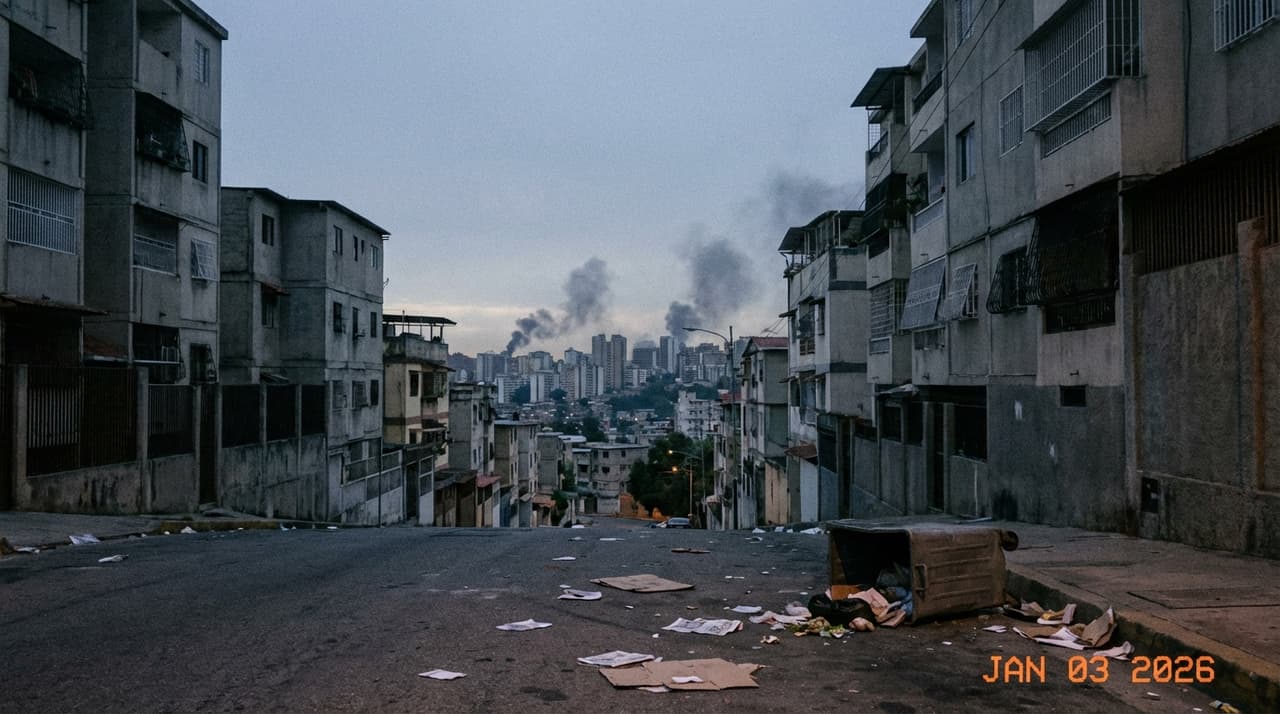
- U.S. military operation successfully captured Venezuelan President Nicolás Maduro and his wife, who were flown out of the country
- Explosions reported in Caracas during the January 2-3, 2026 operation, described by Trump as a success
- Strike disrupts Venezuela's oil-dependent economy amid existing sanctions and hyperinflation, with potential implications for global energy markets
President Donald Trump confirmed in his first interview following the military operation that the United States conducted a large-scale strike on Venezuela, resulting in the capture of President Nicolás Maduro and his wife. The two were reportedly flown out of the country, according to people familiar with the matter who spoke on condition of anonymity.
Explosions were reported in Venezuela's capital, Caracas, during the U.S. operation, with Trump describing it as a success in interviews aired on January 2-3, 2026. Live updates from news outlets detailed ongoing fallout in the city, with residents facing immediate uncertainty and displacement. Opposition groups have hailed Maduro's ouster as liberation from authoritarianism, while supporters have decried it as an invasion, sparking heated debates online about interventionism versus sovereignty.
This development escalates U.S. policy against Maduro's regime, which has long been targeted by sanctions under both Trump and Biden administrations for human rights abuses and election fraud. The strike disrupts Venezuela's oil-dependent economy at a critical moment—the country remains a major global supplier despite being strained by sanctions and hyperinflation running at over 1,000% annually. Potential U.S. control over oil assets could stabilize energy markets in the short term, but risks spiking prices amid global supply fears, according to market analysts.
Internationally, the operation strains relations with Russia and China—both Maduro allies—potentially prompting diplomatic backlash or counter-sanctions. One European diplomat, who requested anonymity due to the sensitivity of the matter, said "the geopolitical ramifications could extend far beyond the Western Hemisphere."
Efforts to establish a transitional government under U.S. influence have reportedly hit early snags, with risks of insurgency from Maduro loyalists complicating the political landscape. In his final pre-capture interview, Maduro discussed defiance against U.S. threats, according to sources who viewed the footage.
Oil futures showed heightened volatility following the operation, with Brent crude swinging between gains and losses in early trading. The situation remains fluid, with U.S. officials reportedly considering basing rights in Venezuela in exchange for economic aid as part of longer-term stabilization efforts.
Attempts to reach representatives of the Maduro government for comment were unsuccessful. The White House press office declined to provide additional details beyond Trump's interview statements, citing operational security concerns.