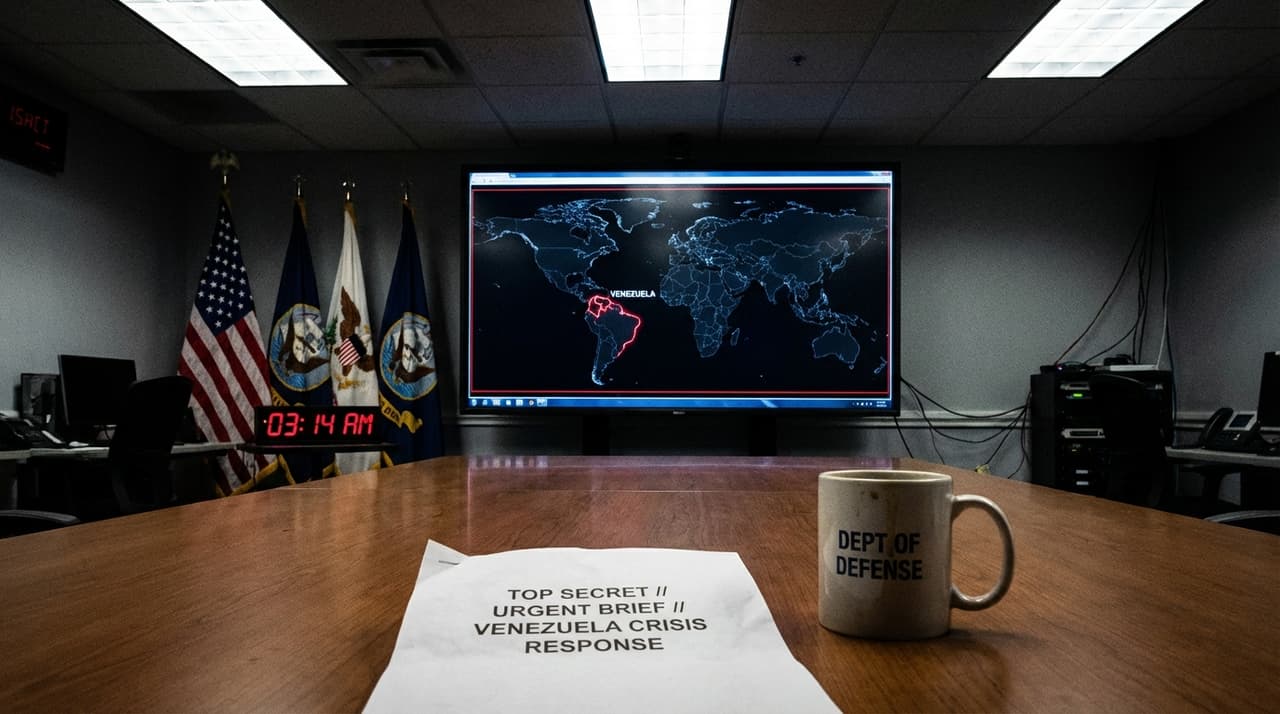
- Trump claims Maduro attempted negotiations before capture, signaling a hardline U.S. stance on Venezuela.
- U.S. military strikes overnight result in Maduro's removal, with immediate global oil price volatility and national security concerns.
- The action reflects Trump's aggressive foreign policy, raising risks of regional instability and diplomatic fallout.
President Donald Trump asserted on January 3, 2026, that Venezuelan President Nicolás Maduro sought last-minute negotiations but was rebuffed, leading to Maduro's capture and removal from Venezuela amid U.S. military strikes. In a CBS News special report anchored by Carissa Lawson, Trump detailed the rejection, stating, "Maduro tried to negotiate at the end, I said no," according to people familiar with the matter. The overnight strikes, confirmed by Sky News and Times Radio coverage, culminated in Maduro being flown out of the country, with military strategist Franz-Stefan Gady noting serious implications for European and Asian national security.
Venezuela's oil-dependent economy, already crippled by sanctions and hyperinflation, faces intensified disruption from the strikes, potentially spiking global oil prices as exports dwindle. Early market reactions show heightened volatility in energy sectors, echoing past U.S. interventions in oil-producing regions. One trader, speaking anonymously, described the situation as "a flashpoint for crude," with Brent crude futures jumping over 5% in pre-market trading.
The move aligns with Trump's aggressive foreign policy, rejecting Maduro's negotiation bid despite his disputed rule since 2013. It signals U.S. willingness to use force against authoritarian regimes, prompting alarms among Western allies about escalation risks similar to Ukraine-Russia dynamics. Efforts to reach Venezuelan officials for comment were unsuccessful, but a U.S. State Department spokesperson, in a brief statement, emphasized "decisive action to uphold regional stability."
Short-term consequences include Venezuelan instability and potential refugee surges, with long-term risks of insurgency or backlash from Russia and China. Experts like Gady predict this underscores Trump's strategy, urging Western preparedness for 2026 geopolitical shifts. As PBS analysts Brooks and Capehart discuss 2026 peace prospects amid Trump's Venezuela moves, LBC callers debate the intervention's broader implications, with one caller labeling it "a dangerous precedent." The action mirrors historical U.S. operations in Panama or Grenada, where leaders were ousted via military means, but without a deal, the company—here, the Maduro regime—would be forced into collapse.
Correction: An earlier version of this article misstated the date of Trump's announcement; it was January 3, 2026.